Stopping keeps feeling out of reach.
Plans to finish repeatedly fall apart, even with support.
A LITTLE CURIOSITY. A LOT TO DISCOVER.
Big ideas. Big feelings. “One more game.”
Your brain has a lot going on. Let’s explore it together—and find little ways to look after you.
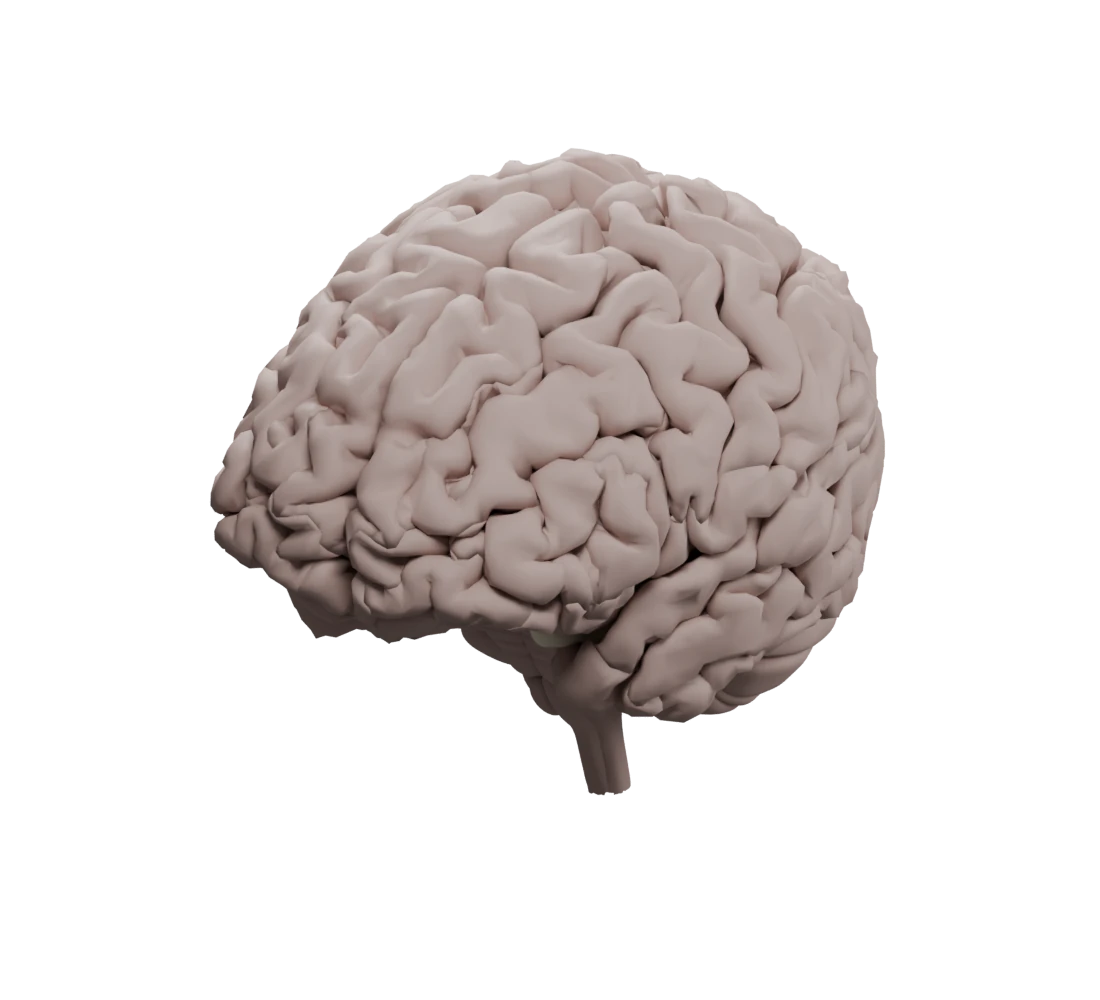 Uniquely you ✦
Meet the brain that helps you think, feel & learn.
LET’S TALK ABOUT IT
Pick a thought. Explore a reply.
Then choose something you’d like to try.
A guided activity with written replies, not a live chat. Your choices aren’t sent or saved.
MEET YOUR BRAIN’S TEAM
Your brain’s cells send messages to each other. Dopamine is one kind of message. Tap a number to meet three parts of a much bigger team.
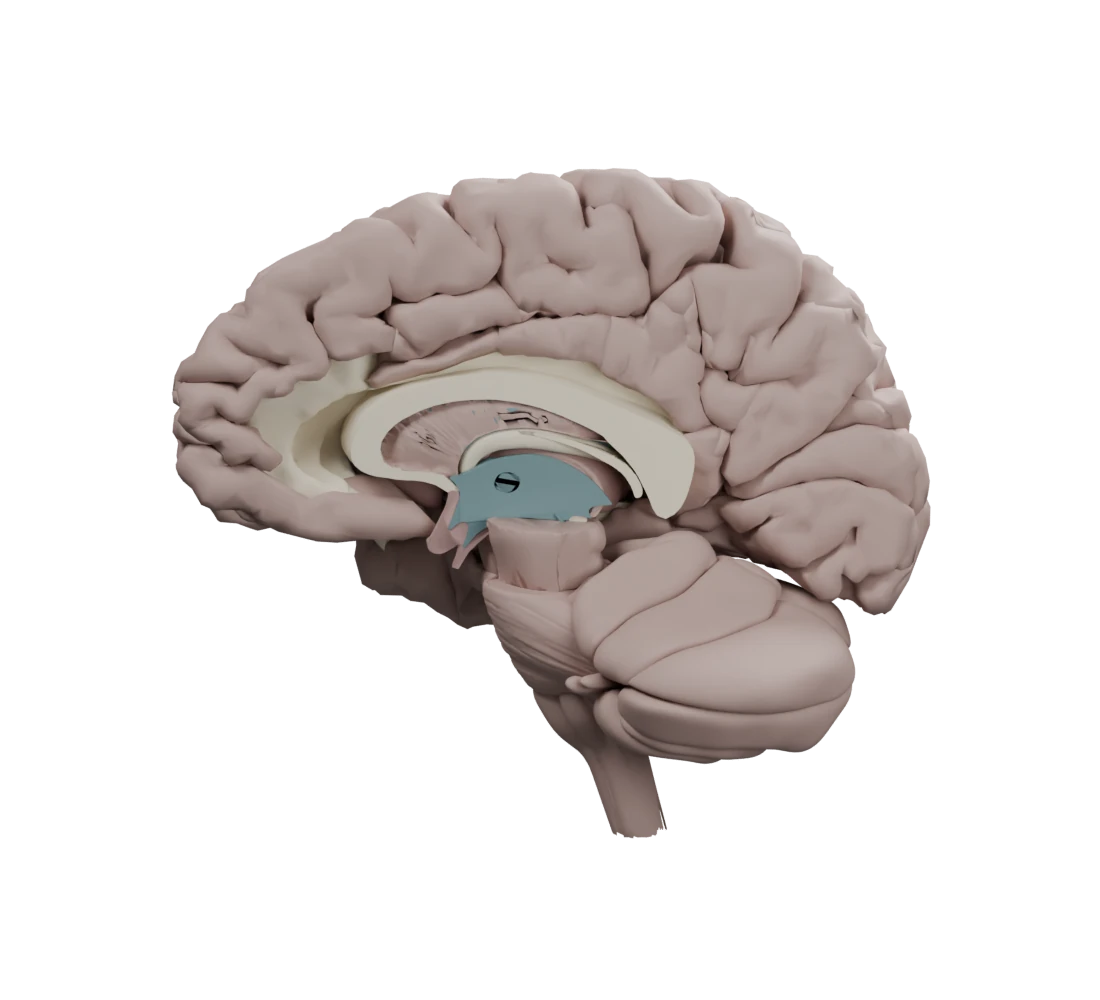
The cutaway couldn’t load. The region buttons and explanations below still work.
Side cut · Forehead to the left. One cerebral hemisphere is removed; the cerebellum and brainstem stay whole for orientation.
Atlas anatomy with illustrative materials. Numbered pointers show approximate teaching locations, not exact region boundaries. This is not an 11-year-old’s scan.
Adapted from Z-Anatomy / BodyParts3D · CC BY-SA 4.0. Credits & changes ↗
Download the cutaway scene ↗WHAT WOULD YOU LIKE TO EXPLORE?
VENTRAL TEGMENTAL AREA
Some cells in this small midbrain area send dopamine signals to other regions, including parts of the striatum and prefrontal cortex. They help us learn about what matters. They do not work alone.
SENDS · Some VTA neurons release dopamine in the ventral striatum and prefrontal cortex.
Dopamine circuit research ↗CONNECT IT TO SAM’S SESSION
A familiar game cue can bring an expected reward to mind. We cannot tell how much dopamine Sam releases from that feeling.
Changing the region or chapter changes the explanation, not a chemical reading.
Learning about your brain isn’t a test. If gaming keeps getting in the way of your day, a trusted adult can help you work out what to do next.
Find words to start a conversationCircuit sources explain general biology. Drug-addiction findings do not establish the same changes during Roblox play in children. NIDA: simplified dopamine pathway (page 13) ↗
Specialized PET studies use radioactive tracers and models to estimate aspects of dopamine signaling. This is research equipment, not something a website or webcam can do. It is not a routine gaming check for children.
A published gaming PET study ↗MRI shows structure. Standard fMRI tracks blood-oxygen changes related to activity; it does not directly report dopamine concentration. A colored brain picture is not a dopamine measurement.
NIH: What MRI measures ↗No sensor, scan, or chemical data is connected. The colors identify regions only. There is no dopamine threshold here that diagnoses addiction or guarantees safe play.
What families can actually notice ↓The illustration couldn’t load. You can still explore every story and brain idea.
Atlas-based anatomy, not Sam’s brain scan.
Colors mark story chapters, not measured brain activity.
01 / THE POSSIBILITY
Before Sam even taps Play, there’s something to look forward to: friends, a new world, or a challenge.
EXPLORE A BRAIN IDEA
Looking forward to something enjoyable can motivate you to start. That feeling is part of how we learn what we want to do again.
WHAT IS SAM HOPING TO DO?
01 / 03 A plan is easier to make before the fun starts.
YOU DON’T HAVE TO DO IT ALONE
You can enjoy games and ask for help with them. Try opening a conversation with someone you trust.
I like playing, and sometimes stopping is hard. Can we make a plan together?A conversation starter you can make your own
Plans to finish repeatedly fall apart, even with support.
Sleep, schoolwork, movement, friendships, or family time are regularly displaced.
Gaming carries on despite repeated harm to everyday life.
If these difficulties recur or cause distress, talk with a trusted adult and a pediatrician or qualified mental-health professional. You don’t need to wait for a diagnosis to get support. These examples are not a screening test.
WHO describes impaired control, gaming taking priority, and continuation despite negative consequences, with significant impairment in daily life. The pattern normally persists for at least 12 months; that is not a reason to postpone help. A qualified professional assesses the full situation. Neither a brain color nor hours alone provides a diagnosis.
WHO: Gaming disorder ↗LET’S PRACTICE TOGETHER
Games can be one good part of your day. Pick a story and explore how Sam makes room for friends, rest, and other things that matter.
A made-up situation: Sam wants to play tonight and still have time for homework, family, and sleep.
Success is keeping room for the rest of the day, not reaching a particular brain-chemical level.
Make a plan togetherFamily routines adapted from the American Academy of Pediatrics’ family media guidance. Choices on this page are fictional practice; nothing is sent or saved.
YOUR IDEAS. YOUR NEXT STEP.
You don’t have to stop loving the game to practice stopping. Try making the next step small and specific.
Just for you. Nothing you choose is sent or saved.
CURIOUS, NOT SCARY
Roblox contains many different experiences. Building, competing, and chatting can ask different things of us. There isn’t one “Roblox brain”—or one way every 11-year-old feels afterward.
This story illustrates possibilities. It doesn’t measure dopamine, show damage, diagnose addiction, or predict what gaming does to a particular child.
A growing brain can learn. Planning and self-regulation keep developing through adolescence. Development varies; age 11 does not define a fixed level of ability. NIMH: The teen brain ↗
Gaming is not simply good or bad. An NIH-supported study of 9- and 10-year-olds found associations between gaming and performance on certain memory and impulse-control tasks. It did not establish that gaming caused those differences or study before-and-after Roblox sessions. NIH: Gaming and cognition ↗
Look at the whole day. The American Academy of Pediatrics advises keeping gaming from crowding out sleep, exercise, schoolwork, and relationships. A stopping plan is a practical strategy, not an instant brain “reset.” AAP: Healthy gaming habits ↗